
.webp?width=600&height=349&name=menu%20item%20-%20fashion%20(1).webp)


.webp?width=2000&name=menu%20item%20-%20collaboration%20(2).webp)
.webp?width=2000&name=menu%20item%20-%20samples%20(1).webp)
.webp?width=2000&name=menu%20item%20-%20profit%20%26%20margins%20(1).webp)
.webp?width=2000&name=menu%20item%20-%20compliance%20(1).webp)

PLM & Product Development
The fashion industry moves fast, but sometimes the most valuable thing you can do is pause. Looking back at the first half of the year helps put the next six months into perspective. What has changed, what have we learned, and should it change the way your brand moves forward?
We're back from summer
Before CIFF, buying meetings, product launches and another busy season take over, let's take five minutes to pause. One thing is certain: the fashion industry never stands still, and the first half of 2026 has been no exception. While many of us have enjoyed a well-deserved summer break, the industry has continued to evolve, and now is the perfect time to reflect on what has actually changed.
Over the past six months, some topics have surfaced in almost every conversation. Others have finally become a little clearer after years of uncertainty. Together, they paint a picture of an industry that is no longer preparing for change, but actively adapting to it.
If the first half of 2026 has taught us anything, it is that the brands making the biggest progress are not necessarily the ones moving the fastest. They are the ones building stronger foundations, improving collaboration, making better use of technology, and preparing their product data for what comes next.
Here are three themes that, in our view, have defined the first half of the year and will continue to shape the months ahead.
The next chapter of AI in fashion
Earlier conversations often focused on what AI might be capable of. Today, brands are far more interested in how it can support everyday work. They are integrating AI into daily tasks, not as a replacement for people, but as a way of helping teams work more efficiently.
There is also a growing understanding that successful AI initiatives require patience. AI does not instantly solve operational challenges, and it certainly cannot compensate for poor data. Like any other technology, its value depends on the quality of the information it has available and the people providing the context.
That is perhaps one of the most reassuring developments we have seen this year. The industry is approaching AI with greater maturity. Brands are investing time in understanding where it creates real value, building internal knowledge, and gradually integrating it into existing workflows rather than expecting overnight transformation.
“
“Go find out what everyone's day actually looks like and help them deconstruct the work into something an agent can complete”
Halldór Gunnarsson, Chief Technical Officer at Delogue
The result is not fewer people making decisions. It is better-informed people spending less time on repetitive tasks and more time on the work that actually requires human expertise.
The supply chain is becoming more strategic
If there is one conversation that has continued to grow this year, it is the one around supply chains.
Price and margins remain under pressure, but brands are increasingly recognising that long-term success depends on much more than cost. Balancing cost with quality, sustainability, and speed has become one of fashion's biggest operational challenges. Pushing for lower prices often creates pressure elsewhere in the supply chain, while reducing lead times without compromising quality requires stronger collaboration than ever before.
That is where operational excellence comes into the picture. It is about creating workflows that allow brands and suppliers to work from the same information, make decisions earlier, and solve challenges before they become expensive problems. Better collaboration does not remove complexity, but it makes it significantly easier to manage.
Perhaps that is one of the biggest shifts we have seen this year. The most resilient brands are not simply negotiating harder. They are investing in stronger supplier relationships and building processes that create value for everyone involved.
Regulations are becoming reality
No review of 2026 would be complete without talking about compliance.
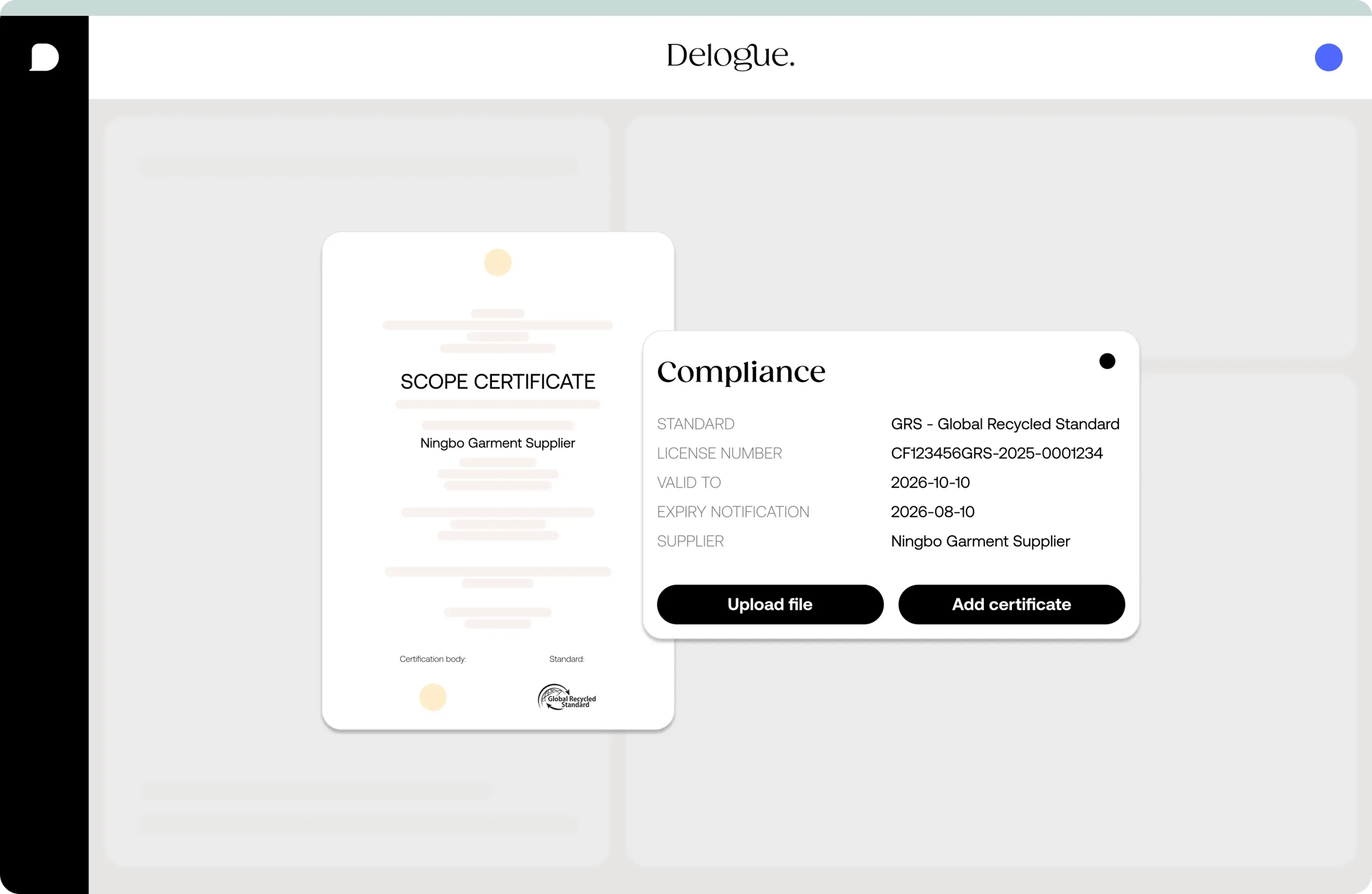
Over the past six months, regulations such as PPWR, ESPR, EUDR, and the Digital Product Passport have continued to shape the industry's priorities. While there is still plenty to prepare for, the biggest difference is that many of the unknowns are finally becoming clearer.
One of the most significant milestones has been gaining a better understanding of the expected data requirements for the Digital Product Passport for textiles, including the anticipated 49 product data points. Combined with PPWR coming into force on 12 August, brands now have a much stronger foundation for planning ahead.
That is why we believe the second half of 2026 will be less about speculation and more about preparation. At Delogue, we are already exploring what these upcoming Digital Product Passport requirements mean in the context of PLM data, helping brands understand not just what information will be needed, but where it should live and how it can become part of everyday product development.
“
“The focus is gradually shifting from understanding what is coming to understanding how to prepare.”
Anja Padget, Chief Marketing Officer and ESG Expert at Delogue PLM
Check out our monthly webinar
Every month, we host a webinar, often in collaboration with our IT solution partners and leading industry brands. The topics vary, but one thing remains the same: we aim to make the fashion industry’s challenges more manageable and share our take on practical, hands-on solutions.
Check out this month’s webinar by clicking the button below.
8 minute read