PLM for Sustainability & Compliance Teams
Sustainable fashion: A real data platform for sustainability teams
Sustainable fashion needs proof. And proof depends on product data you can trust.
Delogue keeps sustainability work tied to the same live product record the business already uses in development, so documentation is captured as decisions are made and supplier input is visible in context.
That gives sustainability teams a solid basis for credible claims and simpler reporting.
-
Sustainability work without product data is just guesswork
Sustainability professionals in the fashion industry are under constant pressure to document and explain decisions they didn’t always influence.
They’re still expected to answer detailed questions about materials, suppliers and certifications, often without a dependable product record to lean on.
Each season, traceability starts again, and when sustainable fashion isn’t anchored in real product development data, teams end up chasing answers with a higher risk of reporting errors and unintentional greenwashing.
What sustainable fashion looks like with Delogue
With Delogue, sustainable fashion becomes part of daily workflows rather than an after-the-fact validation step.
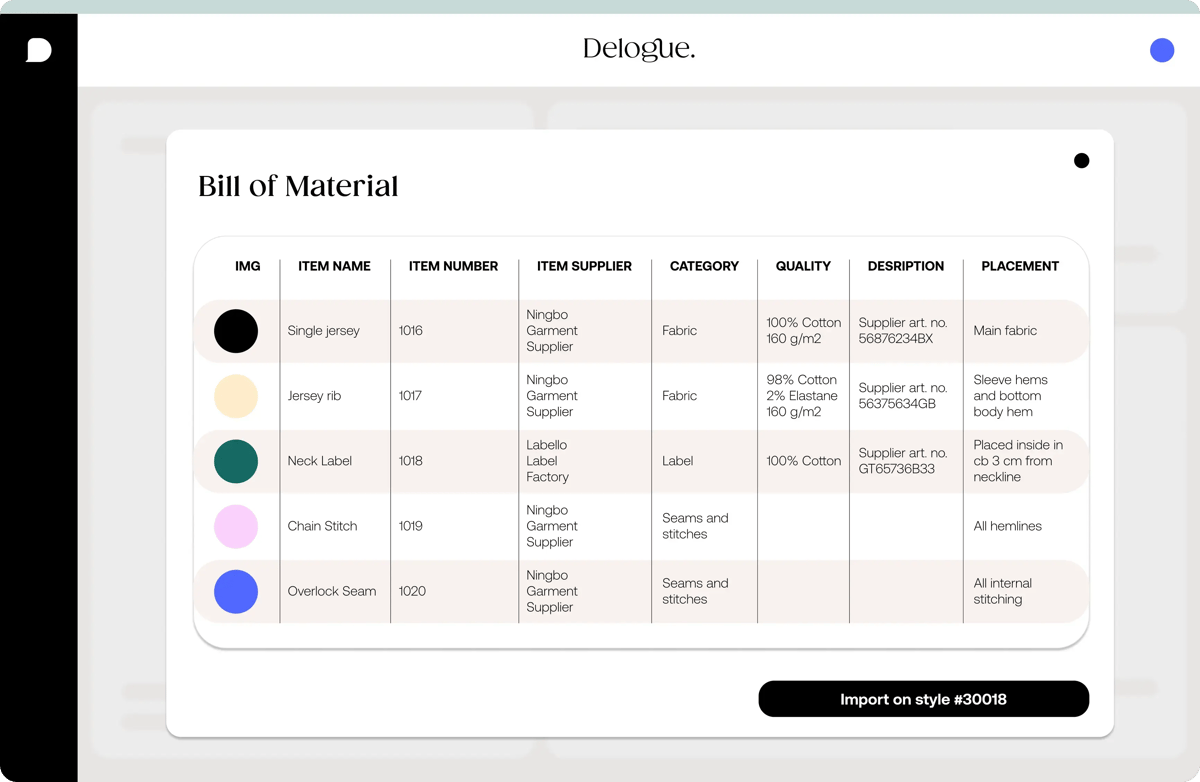
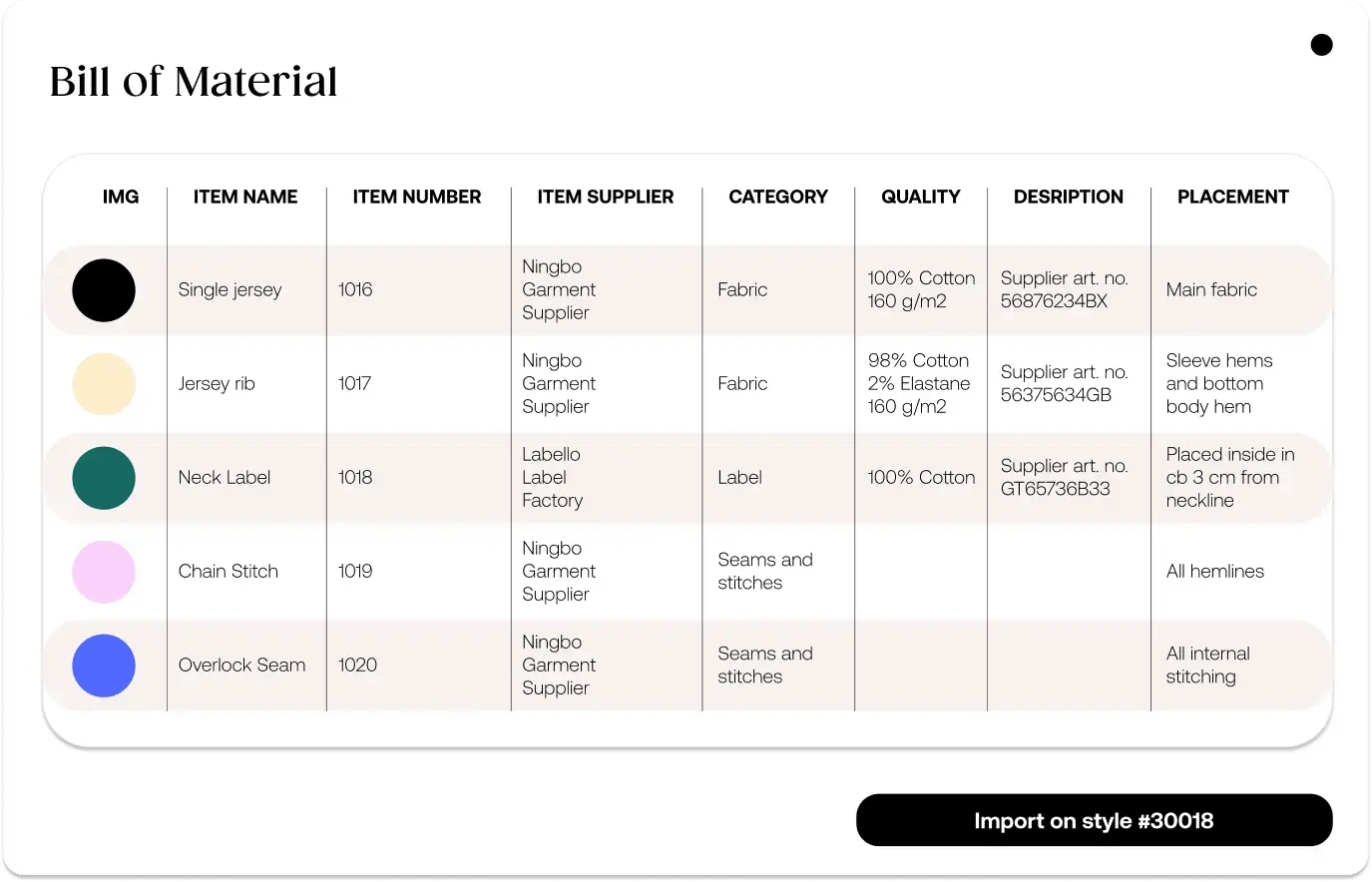
Sustainability teams work from the same product data as design, buying, and sourcing, with structured access to styles and collections, materials and components, supplier information, and certifications all connected directly to the product.
Detailed product specifications
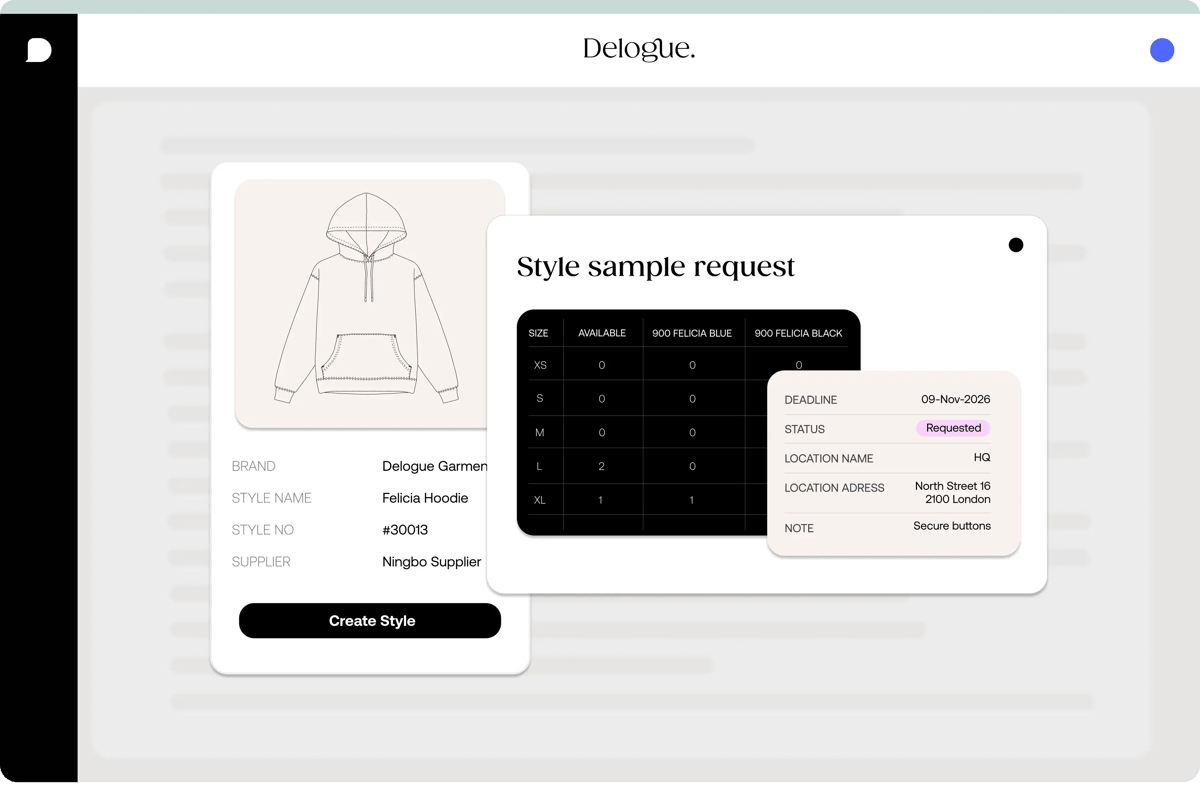
Simplified approval flows
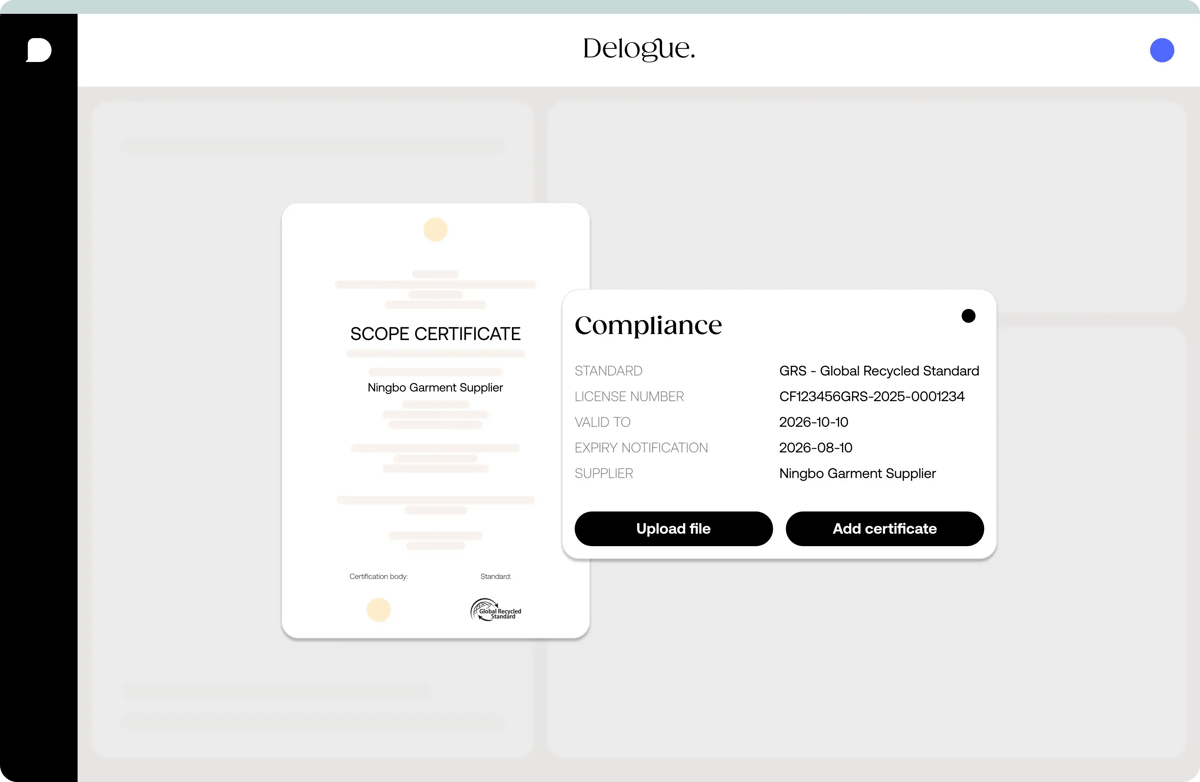
Documentation in one place
Connecting sustainable fashion targets to supply chain sustainability
High-level sustainability targets only create impact when they are translated into real decisions across the supply chain. Delogue helps connect sustainable fashion goals to concrete supply chain sustainability by linking strategy directly to product and sourcing data.
Sustainability teams can see how materials and fibres are used in specific styles, how suppliers are connected to components and finished products, and how certifications and audits apply in practice rather than in theory.
Risk indicators can be viewed alongside sourcing decisions, making potential issues visible earlier. This connection makes sustainability operational instead of abstract. Teams gain a clear understanding of how targets play out across collections and suppliers, replacing assumptions and aggregated estimates with accurate, product-level insight.
The sustainability data you need, without manual traceability chases
Traceability work is often repeated from scratch. Each new request triggers another round of emails, spreadsheets, and file searches, pulling sustainability teams away from actual improvement work. Delogue replaces this fragmented approach with one structured system where sustainable fashion data is centralised and connected to real products.
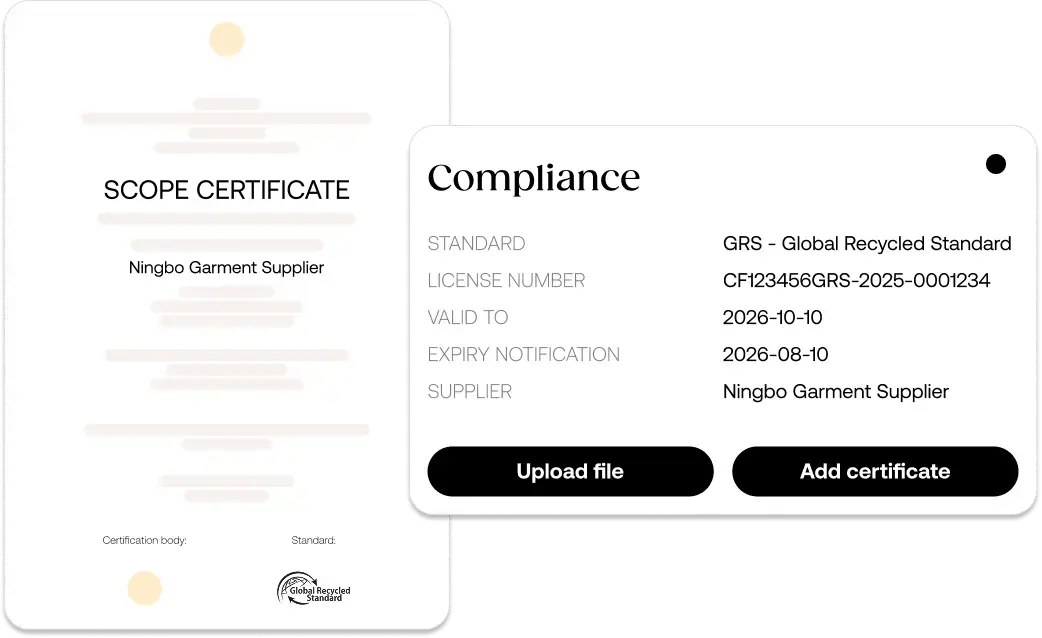
Sustainability teams can quickly see which materials and fibres are used in specific styles, which suppliers are linked to which products, and which certifications apply in each case. Documentation status is visible at a glance, including what is valid, missing, or expired.
Because data is linked directly to products and components, traceability becomes part of everyday workflows rather than a special project, supporting stronger supply chain sustainability with far less manual effort.
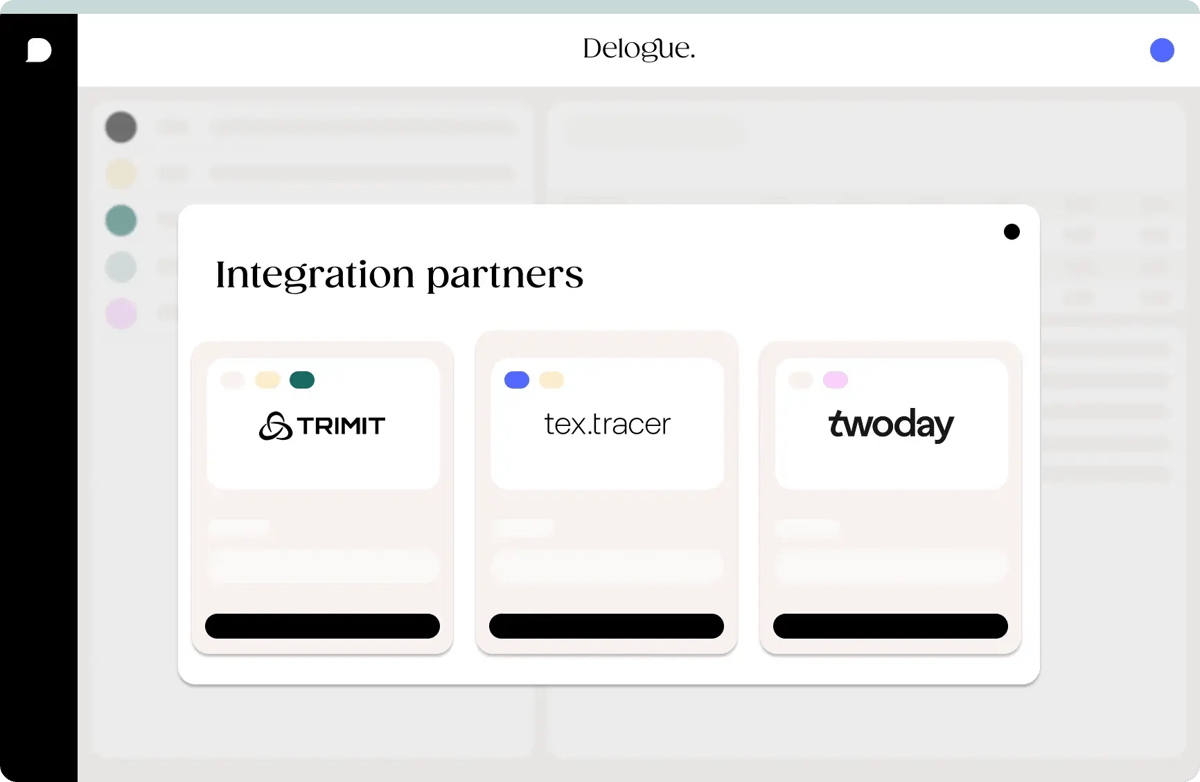
Connected through partners
Delogue collaborates with leading fashion IT solutions to create an open, adaptable ecosystem that fits your workflows and scales as your needs evolve.
What better sustainability workflows mean for risk and reporting
Weak data foundations increase risk. When sustainability documentation is incomplete, outdated, or disconnected from the products it relates to, reporting becomes fragile and claims are harder to substantiate. Delogue supports sustainable fashion workflows that bring structure and consistency to how sustainability data is managed across product development.
Documentation stays linked to the right styles, materials, and suppliers, making it easier to verify information and demonstrate progress over time. Reporting becomes less about chasing inputs and more about working with reliable, auditable data.
Clearer workflows also help teams track progress against sustainability goals with greater confidence. This shift allows sustainability teams to move beyond reactive reporting and play a stronger role in risk management, credibility, and long-term accountability.
How it feels to drive sustainable fashion in Delogue instead of in slides
For many sustainability teams, daily work happens in presentations and spreadsheets, disconnected from where product decisions are actually made. Delogue changes that dynamic by bringing sustainable fashion into the same workflows used by design, buying, and sourcing.
Sustainability teams work with real product and supplier data instead of static summaries, spending less time collecting inputs and more time contributing insight.
Collaboration with other teams becomes more natural because everyone works from the same information. Rather than explaining sustainability after decisions are already set, teams are involved while choices are still open.
This shift reduces reactive firefighting and allows sustainability professionals to focus on driving measurable improvements where they matter most.
Ready to see what PLM for sustainability teams looks like in real life?
See how Delogue supports your sustainability team in driving sustainable fashion
Delogue is built to support sustainability teams that need reliable data and real influence on product development.
If you want to see how sustainable fashion works in practice across materials, suppliers, certifications, and supply chain sustainability we’d be happy to show you.
Explore how Delogue becomes the daily workspace for sustainability teams working to turn goals into action.