
.webp?width=1200&height=698&name=menu%20item%20-%20fashion%20(1).webp)







.webp?width=1200&height=544&name=menu%20item%20-%20collaboration%20(2).webp)
.webp?width=1200&height=544&name=menu%20item%20-%20samples%20(1).webp)
.webp?width=1200&height=544&name=menu%20item%20-%20profit%20%26%20margins%20(1).webp)
.webp?width=1200&height=544&name=menu%20item%20-%20compliance%20(1).webp)




PLM & Product Development

Better product data is about much more than preparing for the next regulation. The same foundation can make everyday work easier, give AI something meaningful to work with and prepare your products for what comes next. Your next advantage might already be in your data. The question is whether you can actually use it.
When bad data becomes expensive
A wrong colour code does not sound like a major business problem. Neither does a missing fibre composition, an outdated measurement or a supplier detail sitting somewhere in an email thread. Until that information starts moving. The wrong measurement reaches the sample room. An old BOM is sent to a supplier. Buying and design are working from two different versions of the same style. Or someone spends half an afternoon trying to find the certificate that proves what everyone is pretty sure they already know.
This is where the real cost of bad product data starts to show. It creates extra samples, repeated work, more emails, slower decisions and mistakes that become increasingly expensive the further a product gets into development. And there is another cost that is harder to measure: trust. If teams constantly have to double-check whether the information in front of them is correct, having the data in the first place does not help much.
Good product data management is therefore not about creating a beautifully organised database. It is about making everyday work easier and creating a foundation you can actually rely on.
“
“Bad product data rarely stays a small problem. The further it travels through the product journey, the more expensive it becomes.”
Anja Padget, Chief Marketing Officer and ESG Expert at Delogue PLM
Context changes everything
Having data is one thing. Knowing what it means is another. Someone sends you a message saying: "It's 42." Okay... 42 what? A shoe size? A measurement? A price? The number of samples currently waiting for approval? Add "shoe size" and suddenly that number means something. That surrounding information is context, and product data works in much the same way.
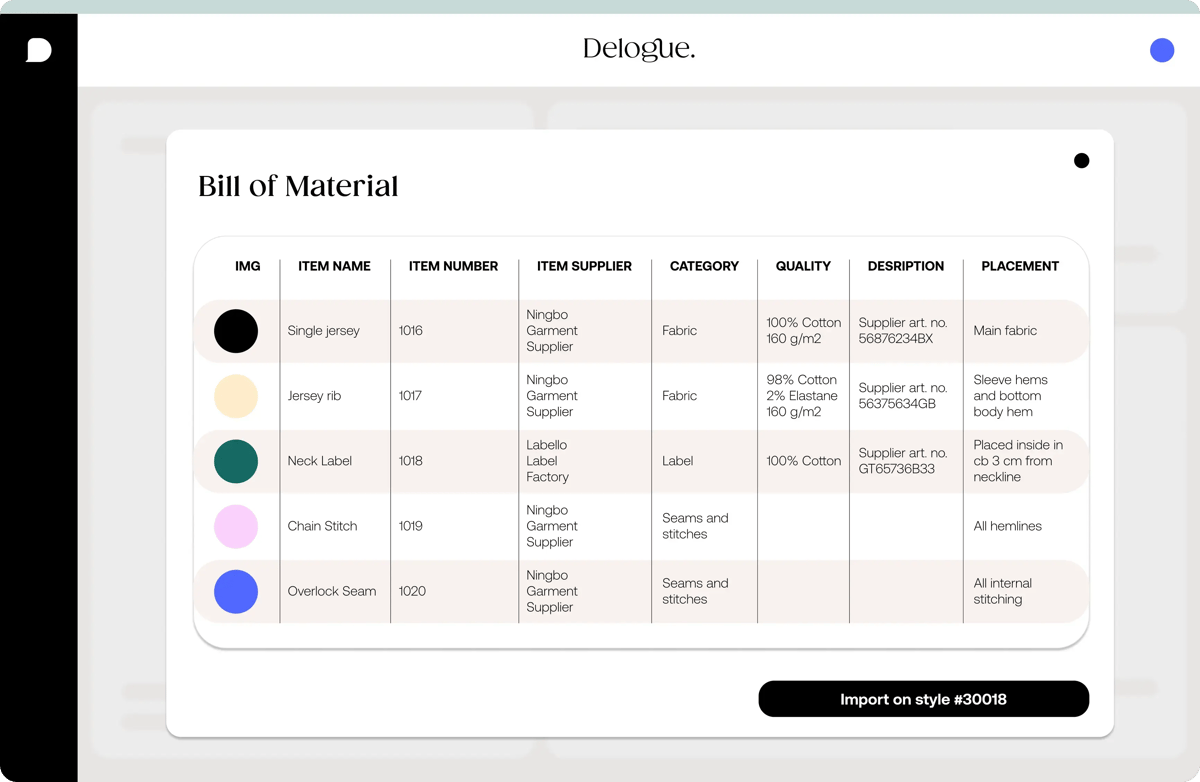
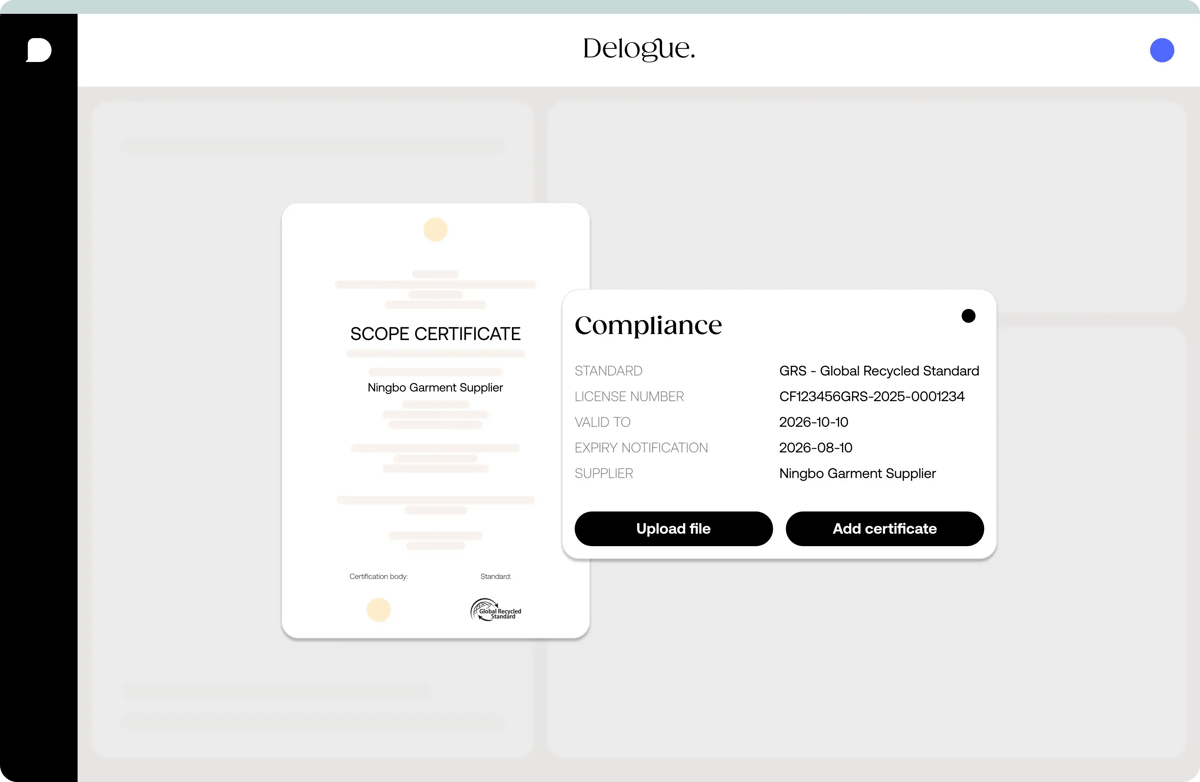
"100% cotton" is data. Connect it to a specific material, supplier, certification, colourway and the styles using it, and you have something far more useful. You know what the information belongs to, where it came from and where else it matters. This becomes particularly important as brands collect more information about every product they develop. Simply storing thousands of data points is not the goal. They need relationships and structure around them so people can understand what they are looking at and actually use it. It is also where PLM compliance becomes relevant, connecting the product development data you already work with to the growing information requirements around your products.
And increasingly, it is not only your colleagues who need that context. AI does too.
AI can't guess what you mean
If you work for a fashion brand, there is a good chance management has already asked how you could be using more AI. Probably more than once. But deciding to use AI is the easy part. Giving it something useful to work with is where it gets interesting.
Ask AI whether a style is ready for production without giving it any context, and the question is almost meaningless. What does ready mean? Is the BOM complete? Are measurements approved? Which supplier is producing it? Give AI access to that context and suddenly the possibilities change.
AI cannot invent a missing fibre composition or know which measurement is correct when three versions are floating around. But give it trustworthy, structured product data and it can analyse information, spot what is missing and make existing knowledge much easier to use. So perhaps the question is not simply where can we use AI? but what are we giving it to work with?
“
“AI can do a lot with good context. What it cannot do is magically know your products, processes or data.”
Halldór Gunnarsson, Chief Technology Officer at Delogue
Your DPP starts long before the passport
Then there is the Digital Product Passport, one of the big changes coming through the ESPR.
It is easy to picture the DPP as the QR code a customer will eventually scan. But the interesting part is everything sitting behind that little square. Think about a T-shirt. Physically, you have one finished product. Digitally, there is a much bigger story: fibre composition, materials, suppliers, manufacturing information, certifications, care instructions and eventually information about repair, recycling and end of life. In other words, a digital twin of the product built from data collected throughout its journey.
The challenge is that this information does not suddenly appear when it is time to create the passport. Much of it is created years earlier and by different people. Design knows one part, sourcing another, suppliers provide something else, while compliance might be collecting documentation separately.
If those pieces are connected from the beginning, the DPP becomes the next use of data you already have. If they are scattered across spreadsheets, inboxes and folders, there is a much bigger job waiting.
Check out our monthly webinar
Every month, we host a webinar, often in collaboration with our IT solution partners and leading industry brands. The topics vary, but one thing remains the same: we aim to make the fashion industry’s challenges more manageable and share our take on practical, hands-on solutions.
Check out this month’s webinar by clicking the button below.
8 minute read