













Costing Sheet
A costing sheet is the document that breaks down what a style costs to make, from fabrics and trims to labour, freight and the margin the brand needs. It is the basis for the costing of garments and for agreeing a price with the supplier.
How a costing sheet works
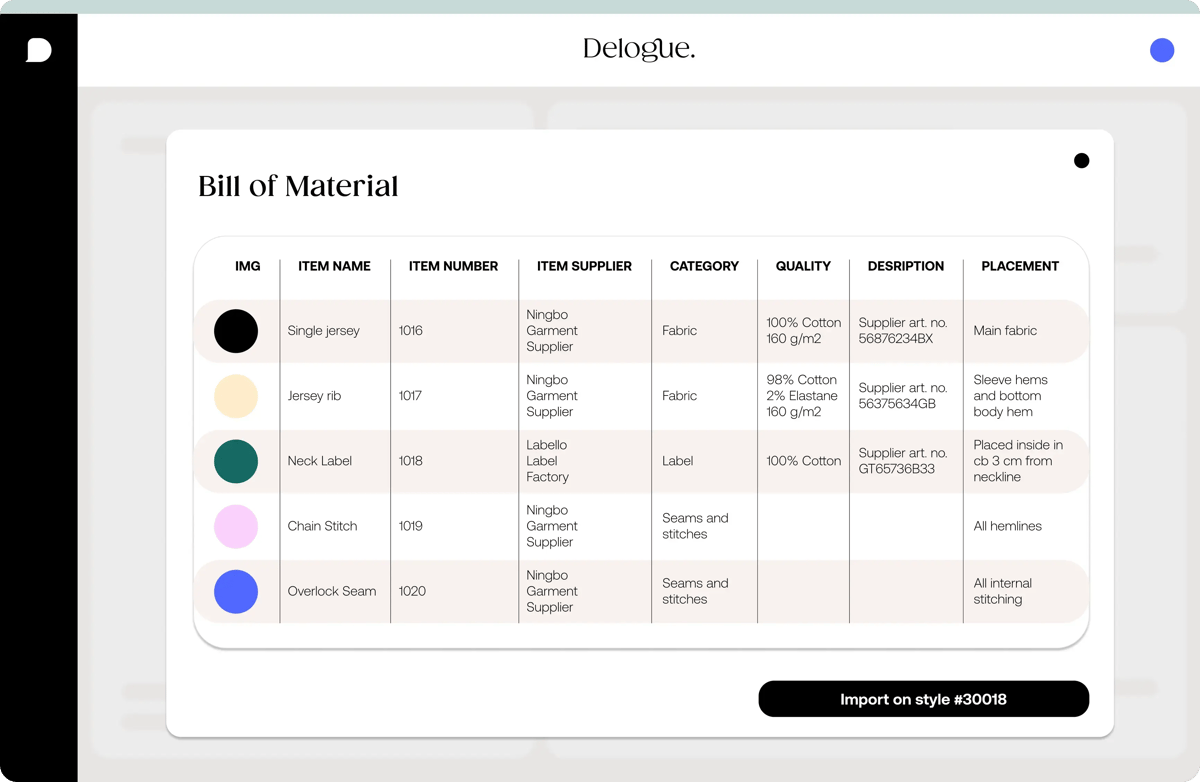
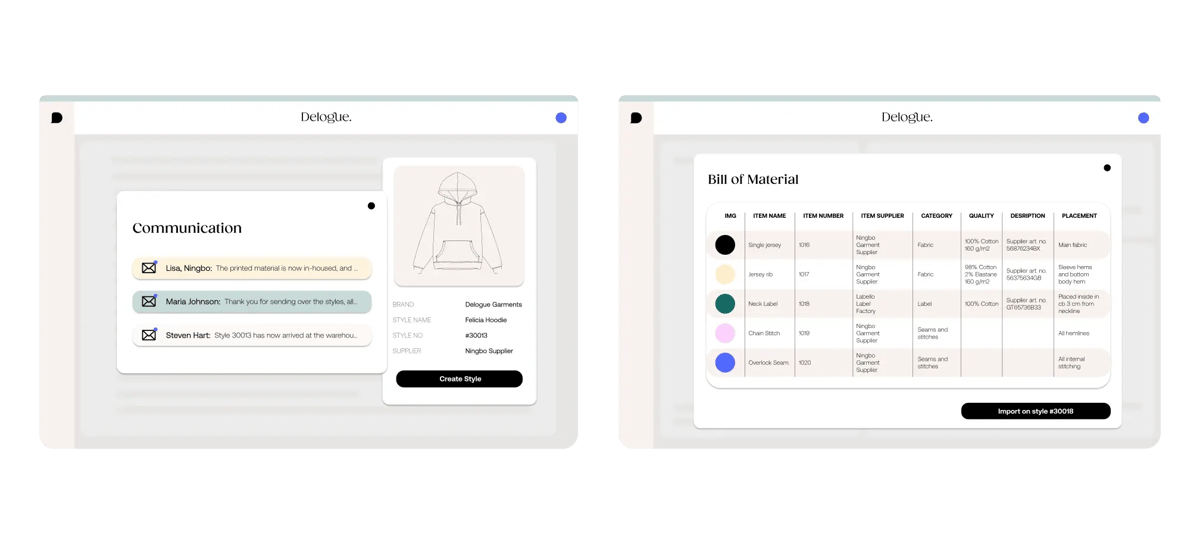
A costing sheet starts from the bill of materials and adds every other cost that sits between a sketch and a finished product: cut, make and trim, packaging, freight and duties. The brand sets a target price, the supplier answers with a cost price, and the two are compared until they agree. The same sheet then shows the landed cost and the margin that is left once the style is priced for retail. Clothing manufacturing cost estimation is only as good as the data behind it, so the sheet has to follow the style as materials, quantities and suppliers change.
Why it matters for fashion and lifestyle brands
Cost drift is easy to miss when costings live in spreadsheets that are copied for every sample round. A small change to a fabric or a minimum order quantity can quietly eat the margin, and by the time it shows up the supplier conversation is already over. Keeping the cost structure for a clothing business tied to the live style means finance, buying and product development all work from the same numbers and can test the effect of a decision before it is locked.
Costing sheets and Delogue
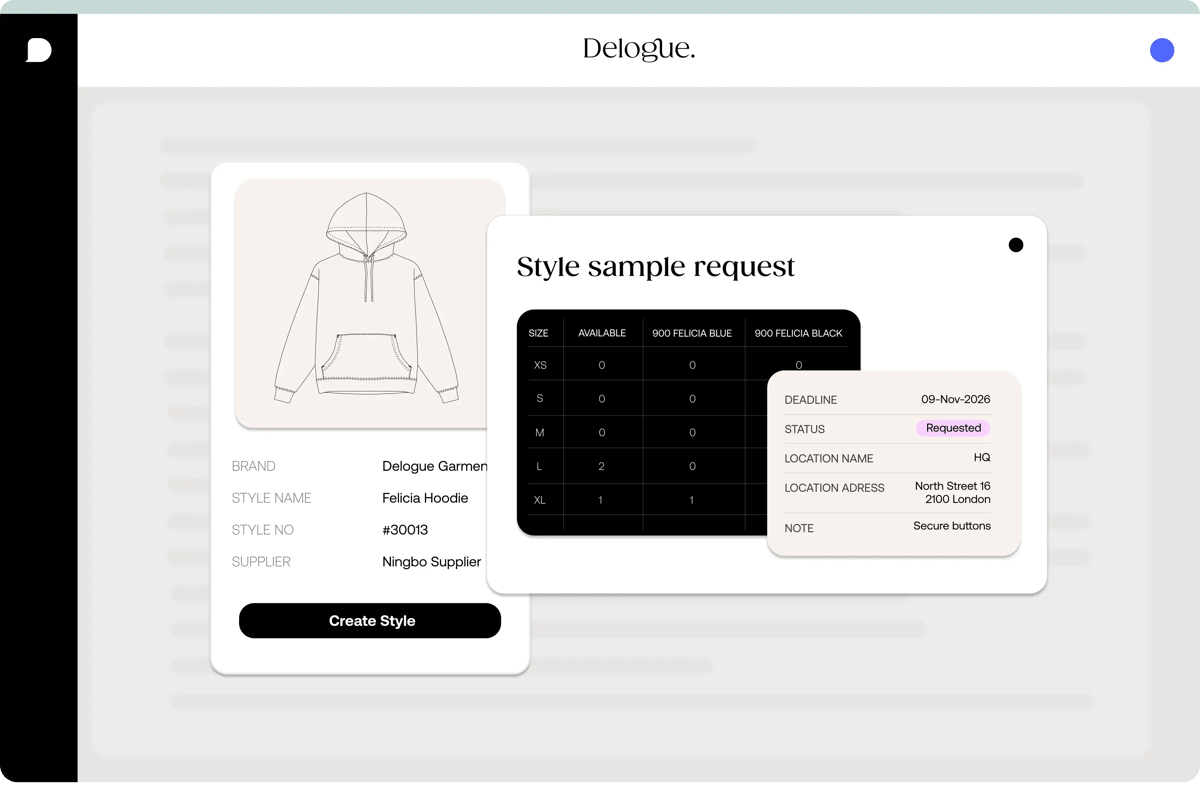
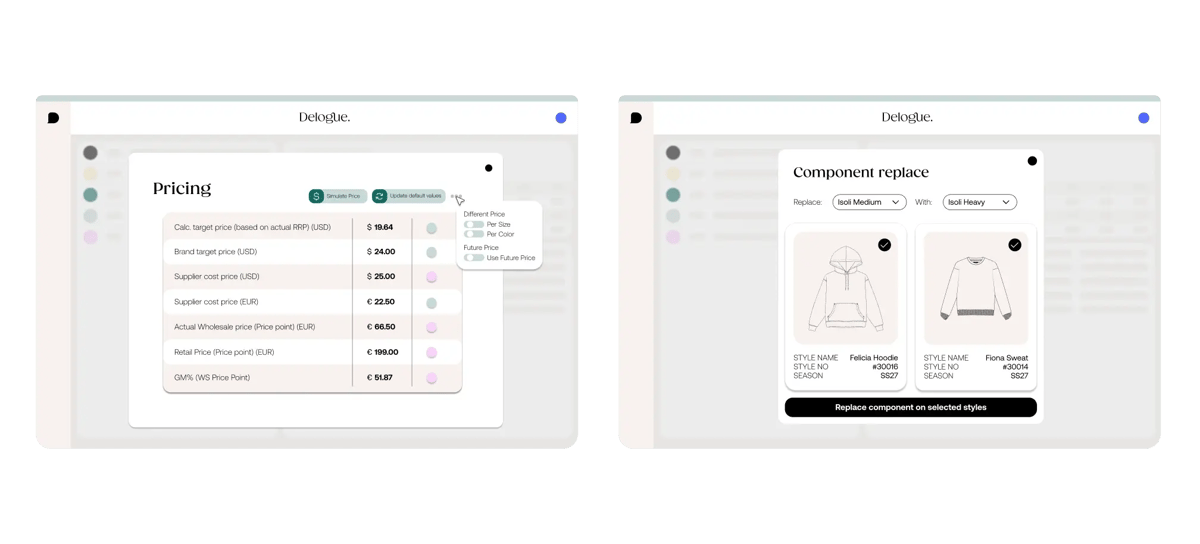
In Delogue, costing sits on the style itself rather than in a separate file. The brand enters a target price, the supplier responds with a cost price, and fields such as landed cost, mark-ups and retail price are calculated automatically from formulas set up in Admin. Prices can be set per colour or per size, approved on the style when both sides agree, and every change is logged in the style's Communication tab. Because material choices stay tied to the BOM, teams can also simulate scenarios, such as supplier options or MOQ shifts, while the style is still evolving. See how Delogue helps protect margins.
Key takeaways
- A costing sheet breaks down the full cost of a style, from materials to freight, and shows the margin left at retail.
- Costing that follows the live style, instead of a copied spreadsheet, stops cost drift from eating the margin.
- In Delogue, target and cost prices live on the style, with landed cost and mark-ups calculated automatically and every change logged.
Ready to explore Delogue?
See how Delogue handles product development, supplier collaboration and compliance tracking. Tailored to you.
Book a demo