
.webp?width=1200&height=698&name=menu%20item%20-%20fashion%20(1).webp)

.webp?width=1200&height=544&name=menu%20item%20-%20collaboration%20(2).webp)
.webp?width=1200&height=544&name=menu%20item%20-%20samples%20(1).webp)
.webp?width=1200&height=544&name=menu%20item%20-%20profit%20%26%20margins%20(1).webp)
.webp?width=1200&height=544&name=menu%20item%20-%20compliance%20(1).webp)

FashionTech Solutions
Fashion brands today are working in more connected digital ecosystems than ever before. And while the growing number of systems can sometimes feel overwhelming, it is also creating new opportunities for stronger workflows, better data, and closer collaboration across the industry.
In this article, we explore why the future of FashionTech is no longer about one system doing it all, but about connected technologies working together.
The systems behind modern fashion brands
Today, it is almost impossible to imagine a fashion brand working without digital systems. And honestly, many of you are probably already working across several different platforms every single day. One for patterns, another for supplier collaboration, maybe one for compliance, and another for orders or logistics. And somewhere along the way, the question naturally appears: why do we need so many different systems?
The world of FashionTech can quickly start to feel overwhelming. APIs, integrations, platforms, workflows… it is easy to lose people the moment the conversation becomes too technical. So let’s keep it simple. A tech stack is basically the collection of systems a brand uses to run the business. From product development and sourcing to logistics, compliance, and sales, different systems support different parts of the journey.
You might create patterns in one platform, move product data into a PLM for development and supplier collaboration, and then send information onwards into an ERP where orders and financial processes are handled. The systems each have their own role, but the real magic happens when they connect and allow data to flow smoothly between them.
“
“The brands moving fastest today are the ones building connected workflows, not isolated systems.”
Jonas Midtgaard, Chief Executive Officer at Delogue PLM
The best-of-breed conversation
And yeah, then the question naturally comes back: why do we need so many different systems?
Of course it would sound easier if one single platform could do everything. But fashion workflows have become highly specialised. Product development, sourcing, compliance, logistics, and supplier collaboration all come with very different needs.
Many brands started their digital journey with ERP systems to manage orders and operations. But over time, expectations grew. Suddenly the same system was expected to handle everything from pattern workflows to ESG data and supplier collaboration. And while that sounds efficient in theory, the reality is that these features are rarely as strong as systems built specifically for those tasks.
That is exactly why the best-of-breed mindset has grown so much in fashion. Instead of relying on one system to do it all, brands are choosing specialised solutions that are really good at their own role and then connecting them together.
And honestly, there is no one-size-fits-all setup. The right tech stack depends on the brand, the workflows, and where the company is in its journey.
The power of FashionTech partnerships
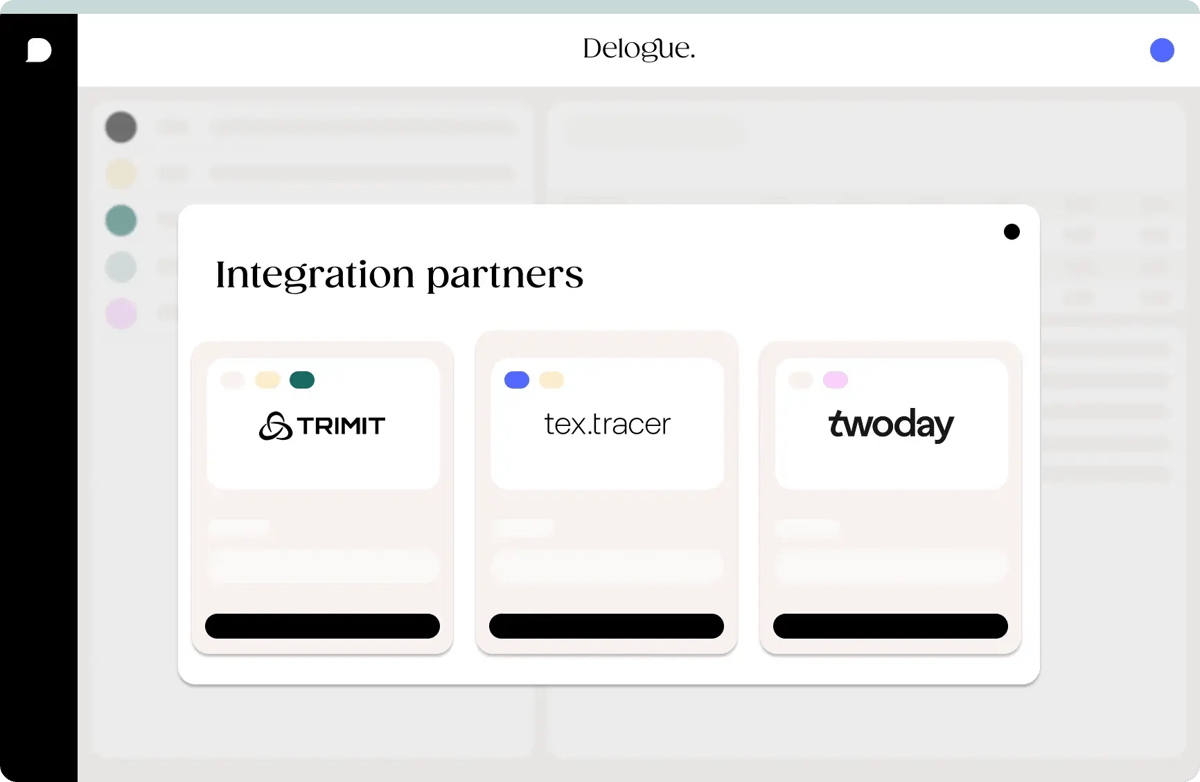
As brands have started working with more and more systems, the way FashionTech companies work together has also changed. Most solutions today know that brands cannot operate smoothly inside just one platform anymore. And that makes collaboration between systems incredibly important.
You might look at some of these solutions and think, “aren’t you technically competitors?” And yes, in some ways that is true. Some systems may overlap slightly in certain areas. But the mindset across the industry is shifting. More and more FashionTech companies understand that the bigger goal is not to win every single workflow, but to help brands build stronger processes and better data flows.
Because the reality is that no two brands work exactly the same way. One solution might be the perfect fit for one company, while another brand needs something slightly different. And honestly, that is okay. What matters most is that the systems can work together and support the brand as one connected ecosystem.
Choosing partners, not just systems
So what does all of this actually mean when you are choosing systems today?
Well, if you already have several systems in place, one of the first things to look at is naturally how a new system fits into your existing tech stack. Can it integrate well? Will the data flow smoothly? And does it support the way your teams already work?
But honestly, choosing a system today is about much more than features alone. It is also about the people behind it. Their understanding of the textile industry, the partnerships they already have, and their willingness to collaborate with both brands and other technology providers.
And you should be able to feel that quite early in the process. The best FashionTech companies are not just trying to sell you software. They are trying to understand how your brand works, where your challenges are, and how their solution fits into your reality. Not because every system should be custom-built for every brand, but because good partnerships start with understanding.
Because in the end, the strongest tech stack is not necessarily the biggest one. It is the one where systems, partners, and people work well together.
“
“The strongest FashionTech setups happen when systems stop competing for ownership and start collaborating around the workflow.”
Kristian Wahl, Head of Partnerships at Delogue PLM
Check out our monthly webinar
Every month, we host a webinar, often in collaboration with our IT solution partners and leading industry brands. The topics vary, but one thing remains the same: we aim to make the fashion industry’s challenges more manageable and share our take on practical, hands-on solutions.
Check out this month’s webinar by clicking the button below.
8 minute read