Enterprise Resource Planning (ERP) manages the logistics of getting a product to market once a design is released, handling production orders, inventory and the financial processes that keep a business running.
How ERP differs from PLM
PLM brings structure to product data and collaboration, while ERP brings financial control and operational oversight. Put simply, PLM governs how products are defined and developed, and ERP manages what happens once the design is released. It is not a case of choosing one over the other; they do different jobs.
How they work together
Starting with PLM gives you control over product data and workflows early on. Then, when it is time to implement ERP, your processes are already structured and your product data is clean, the ideal foundation for resource planning and profitability. Strong integrations between the two ensure decisions made during product development flow directly into operational execution, without manual re-keying.
ERP and Delogue
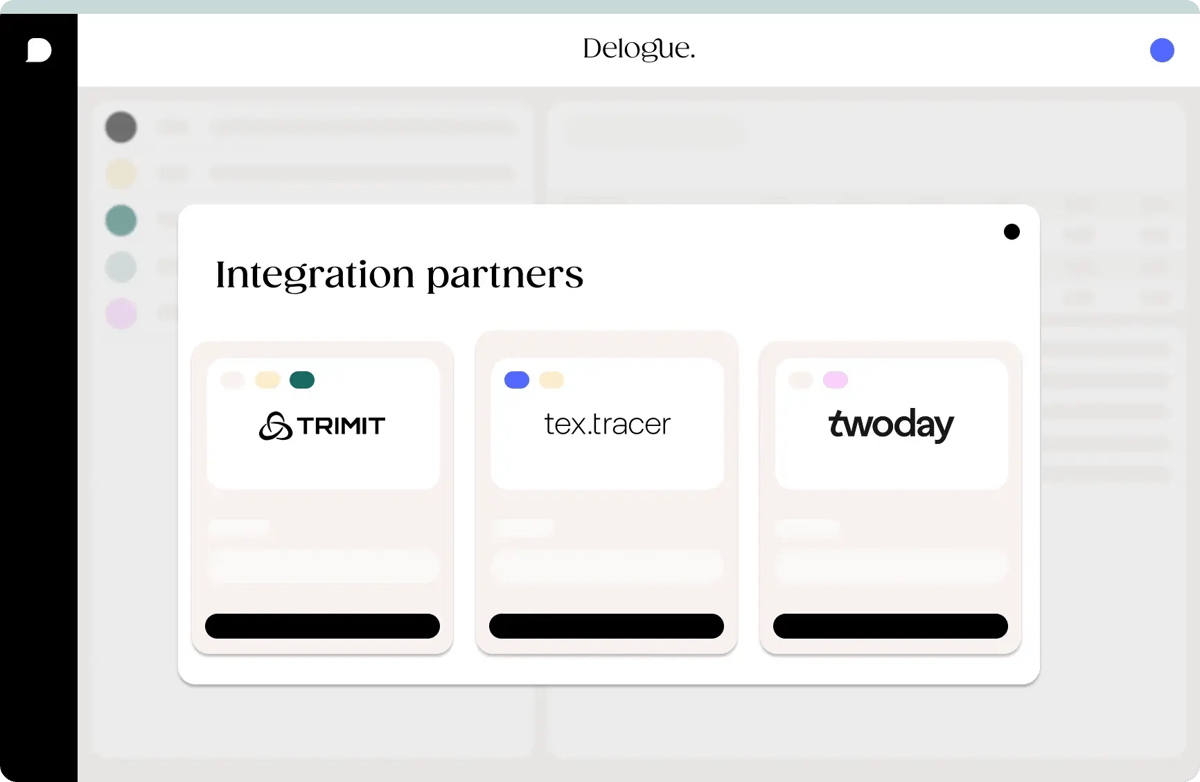
Delogue connects with ERP systems so approved product data flows from development into operations, reducing manual work and keeping both sides in sync. See Delogue's integrations.
Key takeaways
- ERP manages orders, inventory and finance once a design is released.
- PLM governs how products are developed; ERP runs operations.
- Clean PLM data is the ideal foundation for ERP.

.webp?width=1200&height=698&name=menu%20item%20-%20fashion%20(1).webp)






.webp?width=1200&height=544&name=menu%20item%20-%20collaboration%20(2).webp)
.webp?width=1200&height=544&name=menu%20item%20-%20samples%20(1).webp)
.webp?width=1200&height=544&name=menu%20item%20-%20profit%20%26%20margins%20(1).webp)
.webp?width=1200&height=544&name=menu%20item%20-%20compliance%20(1).webp)