Seamless PLM Integrations for Your Tech Stack
Seamless PLM Integrations for Your Fashion Tech Stack
Fashion product development relies on multiple systems working together. When these systems are disconnected, teams face rework, inconsistent data, and late corrections.
Delogue PLM is built to act as the central hub in your tech stack, ensuring product data flows smoothly across systems. With the right PLM integrations in place, decisions are made on a solid foundation, supporting both timelines and margins.
-
PLM as the Hub in a Connected Ecosystem
PLM sits at the centre of product development, where everything from design intent, material choices to costing are brought together in one structured product record.
Because these decisions drive downstream execution, PLM integrations are essential to keep data aligned across the wider tech stack.
Delogue is built with ecosystem thinking at its core, ensuring product data flows reliably between systems.
With the right PLM integrations in place, brands enter product data once and reuse it everywhere, maintaining alignment between development and production.
This connected approach makes it possible to scale operations without increasing complexity or losing control.
Why PLM Integrations Matter for Cost Control and Efficiency
Disconnected systems often hide inefficiencies that only surface when it’s too late to fix them without costs. When product data is manually transferred between tools, teams spend time correcting errors instead of moving products forward, and small inconsistencies can turn into costly late-stage changes.
Continuous data flow
Well-designed PLM integrations create a continuous data flow that reduces friction and supports better control throughout your development processes.
Strong PLM integrations
Integrated for performance
Integration Capabilities Built for Real Fashion Workflows
Designed to Support Your Existing Tech Stack
Delogue is built to integrate with the tools fashion teams already rely on.
With well-designed PLM integrations, the platform adapts to existing systems and workflows while preserving how product data is structured in fashion.
Delogue PLM acts as a structured source of truth, feeding accurate, up-to-date product data into other systems so teams across departments can work from the same foundation.
These PLM integrations are fashion-specific, aligned with real product data models, and focused on reducing operational friction.
Key Integration Areas in Delogue PLM
ERP Integrations for Operational and Cost Alignment
ERP systems manage production orders, inventory, and financial processes, while PLM governs how products are defined and developed.
Strong integrations between PLM and ERP ensure that decisions made during product development flow directly into operational execution without manual intervention.
With a Delogue PLM integration, product data connects at the right level, so development and production stay aligned as products move forward.
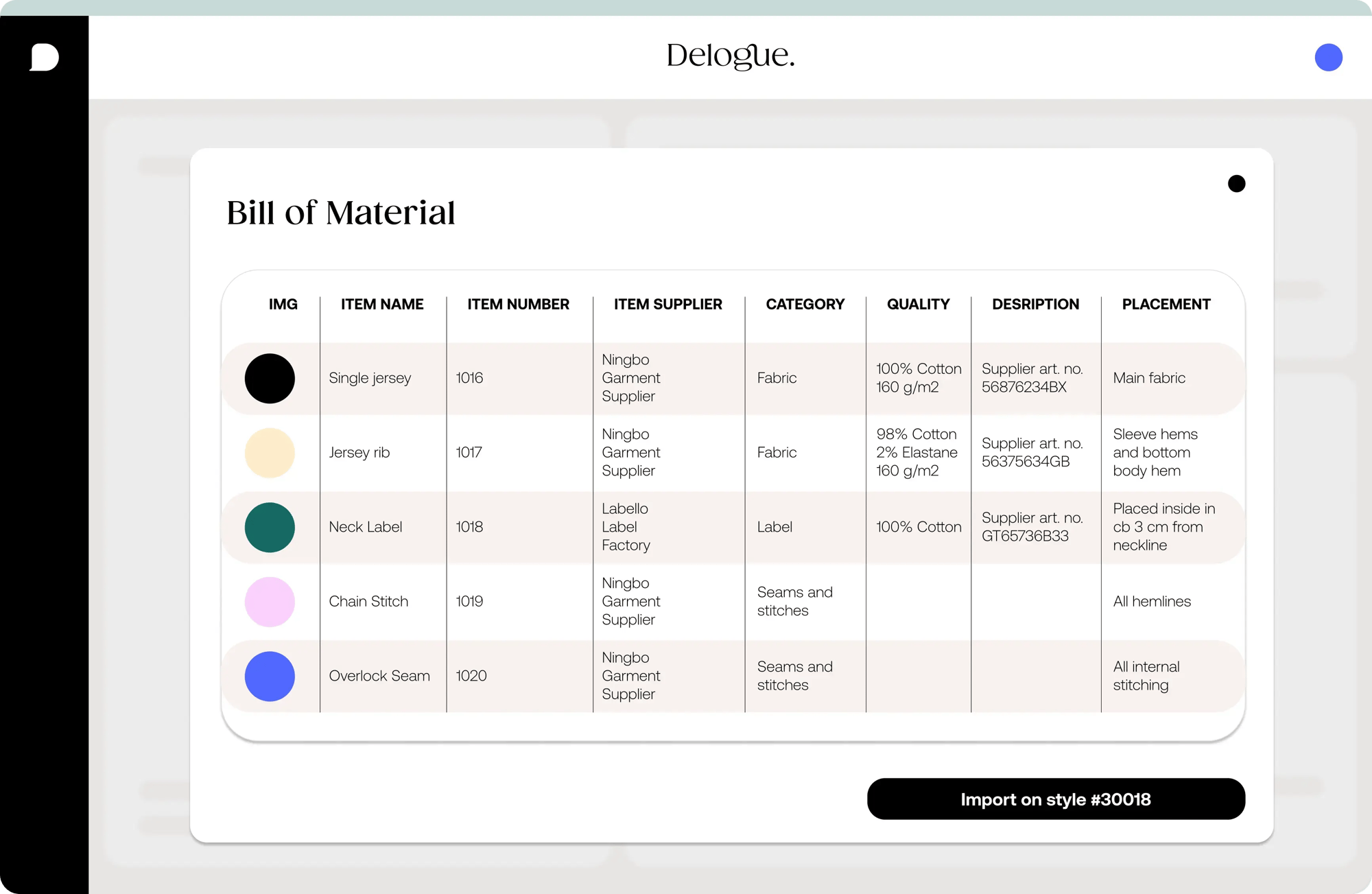
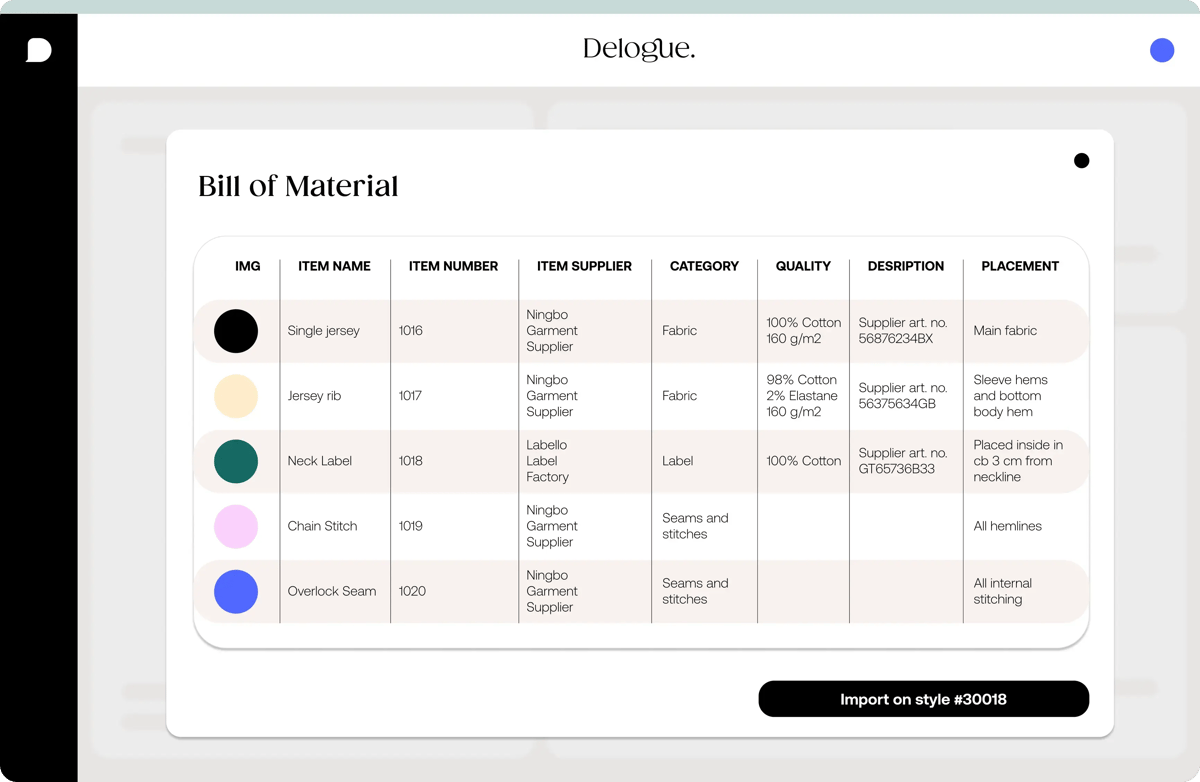
- Transfer of accurate BOMs and product specifications from PLM into ERP
- Alignment between development costs and production data
- Fewer manual corrections before production begins
- Reduced risk of errors that cause delays or added cost
Other Integrations Across the Product Ecosystem
Fashion tech stacks often extend beyond ERP and include a range of specialised tools that rely on accurate product data.
Delogue supports PLM integrations, PLM - CRM integrations, and PLM - CAD integrations across the wider product ecosystem, keeping information consistent wherever it’s used and reducing fragmentation between systems.
- PIM platforms
- CRM systems through plm crm integration, enabling product data to support commercial, key account, and customer-specific workflows
- Reporting and analytics solutions
- Custom internal systems
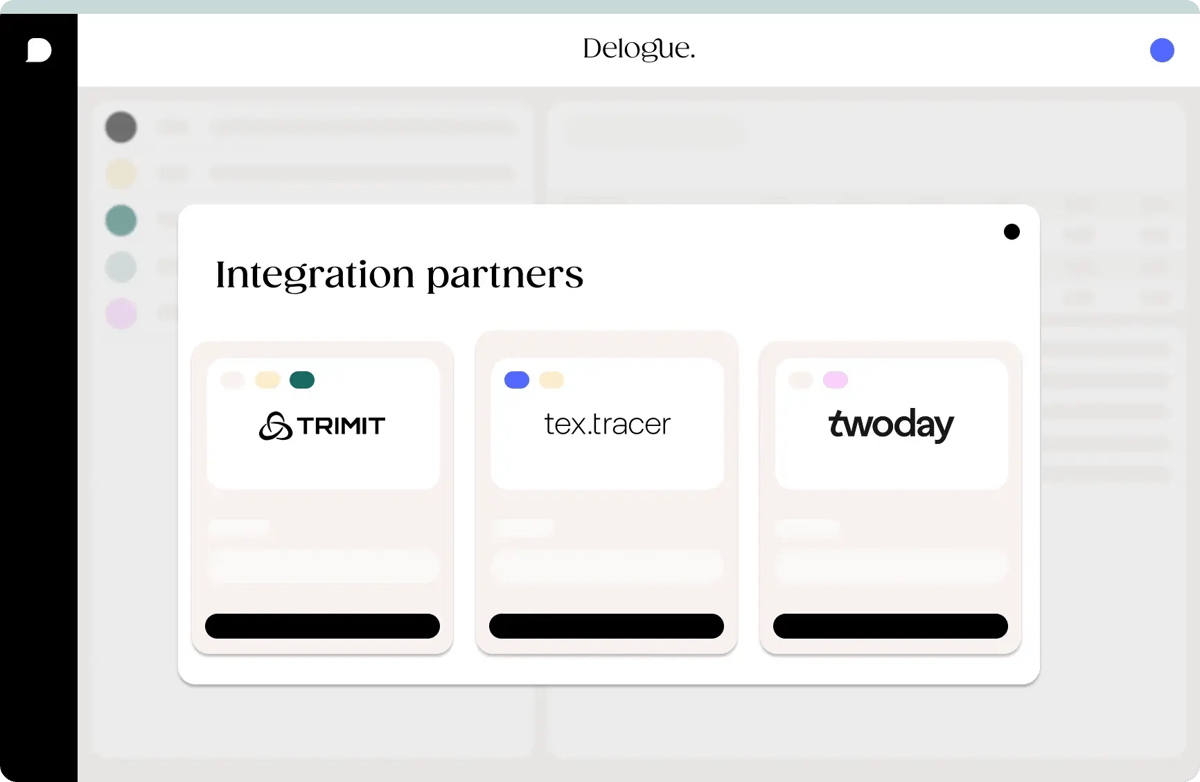
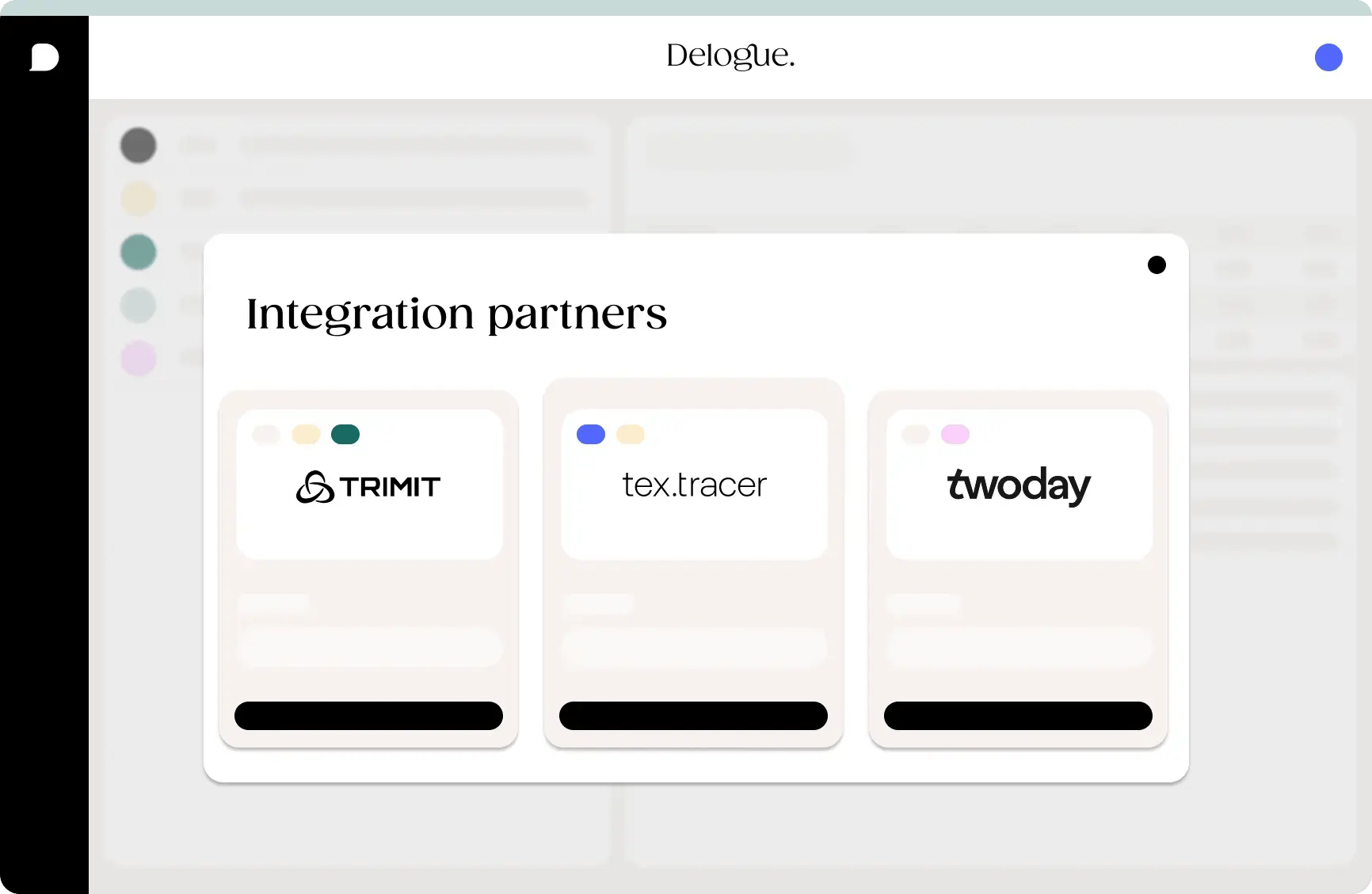
Connected through partners
Delogue collaborates with leading fashion IT solutions to create an open, adaptable ecosystem that fits your workflows and scales as your needs evolve.
Built for Reliable Data Flow and Long-Term Scalability
Structured Data That Reduces Risk and Rework
Delogue’s PLM integrations are built around structured product data rather than simple file transfers, ensuring information keeps its context as it moves between systems.
This reduces misunderstandings between teams because everyone works from the same definitions, specifications, and status. Reporting becomes more accurate as data stays consistent across tools, and automation is easier to support as operations grow and processes mature.
By preserving structure and meaning, PLM integrations help prevent costly errors caused by missing, unclear, or outdated information.
As brands scale across collections, markets, and systems, this level of structure becomes essential for maintaining control, reducing rework, and supporting reliable execution without adding operational risk.
Flexible Integration Architecture
No two fashion brands share the same system landscape. Different tools, partners, and levels of maturity require an integration approach that can adapt over time.
Delogue is built with flexibility in mind, allowing PLM integrations to support both current needs and future growth without locking brands into rigid setups.
As operations evolve, integrations can scale alongside the organisation rather than becoming a bottleneck.
- Different tools and partners
- Changing organisational needs
- Growing volumes and collections
This flexible architecture helps brands expand their tech stack and operations while keeping complexity and operational costs under control, ensuring integrations continue to support the business as it grows.
PLM Integrations That Support Better Collaboration and Margins
One Product Reality Across Systems
The goal of integration is simple: everyone should work from the same product reality, even when different tools are involved.
With Delogue at the centre, well-designed PLM integrations ensure that teams stay aligned around the same product data, reducing misunderstandings and disconnects.
By keeping product information consistent as it moves between systems, PLM integrations do more than save time.
They create the conditions for smoother execution and stronger business outcomes across the product lifecycle.
Frequently asked questions
Fashion PLM software supports the full product lifecycle - from design and development to production readiness - by centralising product data, workflows, and collaboration. It replaces spreadsheets and disconnected tools with one structured system built for fashion processes.
PLM integrations connect product lifecycle management software with systems such as ERP, PIM and other reporting tools. They allow product data to flow between tools, reducing manual work and helping teams stay aligned throughout product development and execution.
Disconnected systems often lead to errors, rework, and late changes - all of which increase cost. PLM integrations help ensure accurate product data flows across systems, supporting smoother execution and more predictable outcomes.
Delogue is designed for fashion and lifestyle brands where product development is a core business function. It supports growing teams that need better structure, clearer collaboration with suppliers, and improved control over complex product data.