
.webp?width=1200&height=698&name=menu%20item%20-%20fashion%20(1).webp)






.webp?width=1200&height=544&name=menu%20item%20-%20collaboration%20(2).webp)
.webp?width=1200&height=544&name=menu%20item%20-%20samples%20(1).webp)
.webp?width=1200&height=544&name=menu%20item%20-%20profit%20%26%20margins%20(1).webp)
.webp?width=1200&height=544&name=menu%20item%20-%20compliance%20(1).webp)




PLM & Product Development
Great products rarely fail because of one big mistake. More often, they unravel because of small things that weren’t clear early enough. This article explores why precision in product development matters more than ever, how getting the basics right from day one saves time, cost, and stress later on, and why operationally excellent brands are building clarity into every step of the process.
Why getting it right early matters
Let’s start with a situation many of us have lived through. Your shipment samples arrive and your heart sinks a little, they’re not quite what you expected. You remember leaving comments on the PPS, not ideal but part of the process, and no time for a 2nd PPS. Yet somehow, none of them seem to have landed. After a bit of digging, you realise what happened. The folder you emailed to the supplier wasn’t the latest version. The real feedback never made it through.
It’s a frustrating moment, and one that usually comes with a quiet realisation. The issue didn’t start with the sample. It started much earlier. Most problems don’t appear out of thin air. They grow from small things like unclear decisions, feedback living in the wrong place, data spread across emails and folders, or approvals made in a rush. And by the time they show up physically in a sample or, worse, in production, they’re already expensive to fix.
This is exactly why precision early in the process matters so much. When the groundwork is solid, when information is clear, shared, and easy to trust, teams move with confidence. Fewer surprises. Less backtracking. And a much smoother path from idea to finished product.
“
“The brands we see succeed are the ones that take precision seriously from day one. Not perfection, but shared vision.”
Jonas Midtgaard, Chief Executive Officer at Delogue PLM
Clarity for product teams, from day one
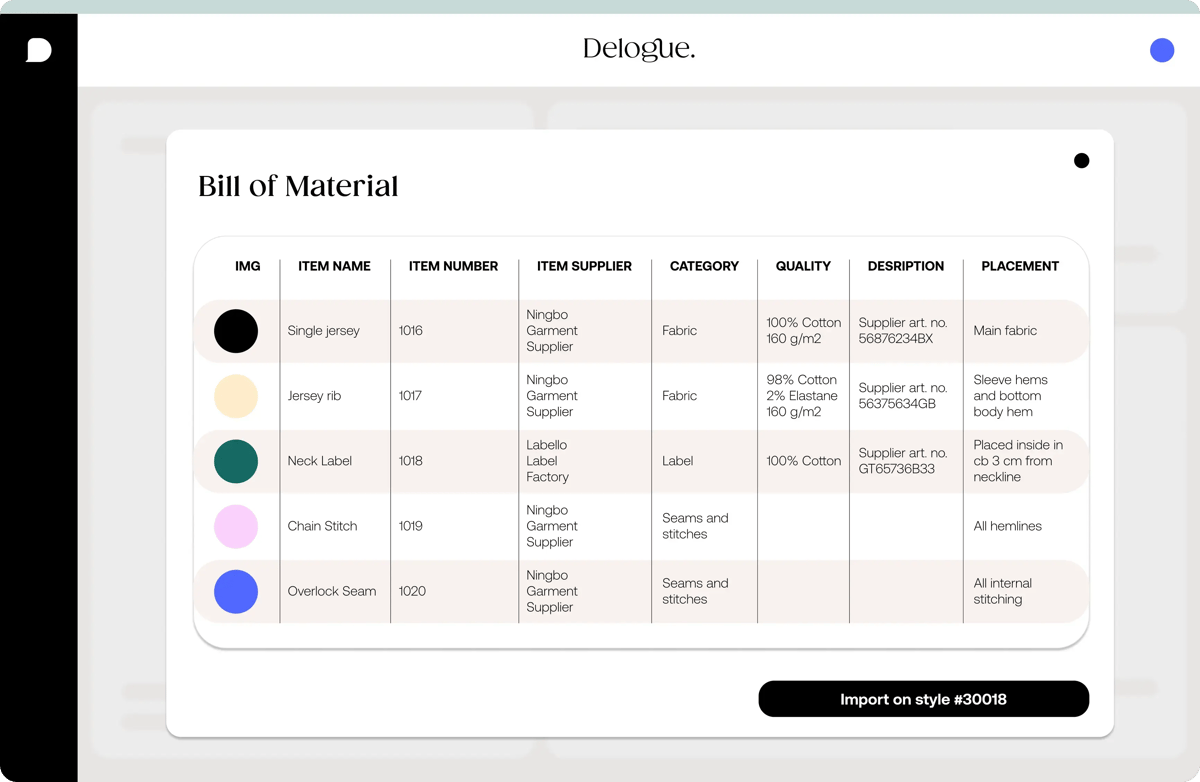
So how does this actually work in real life? Most of the time, it’s not about big transformations. It’s about small, practical steps that create structure and shared ways of working across the team. Things like building a trim library of components you already use again and again. It sounds simple, but that kind of consistency removes guesswork and saves time before problems ever have a chance to appear.
This is where a PLM really earns its place. At its core, a PLM is about giving product teams a common foundation. Everyone works from the same requirements, the same standards, and the same up-to-date information. You know who owns which decisions, where feedback lives, and what the latest version actually is. Instead of juggling files, folders, and emails, the team gains a clear overview of the product as it evolves.
When that clarity is there from day one, product development feels lighter. Teams can focus on what they do best: creating great products with confidence, knowing the details are under control.
From product data to ESG insight
Creating with precision isn’t just a win for product teams. It changes the game for sustainability work too. When details are structured and captured while products are being developed, ESG teams no longer have to chase information after the fact. And that shift alone removes one of the biggest pain points brands face today when it comes to compliance and reporting.
Having everything in one shared space also creates something incredibly valuable: overview. You can finally see what data you already have, what’s reliable, and where the gaps are. Instead of guessing or rebuilding the same datasets every season, sustainability work becomes grounded in real product information that already exists.
“
“The moment sustainability data is connected to real product decisions, it stops being a collecting exercise.”
Anja Padget, Chief Marketing Officer and ESG Expert at Delogue PLM
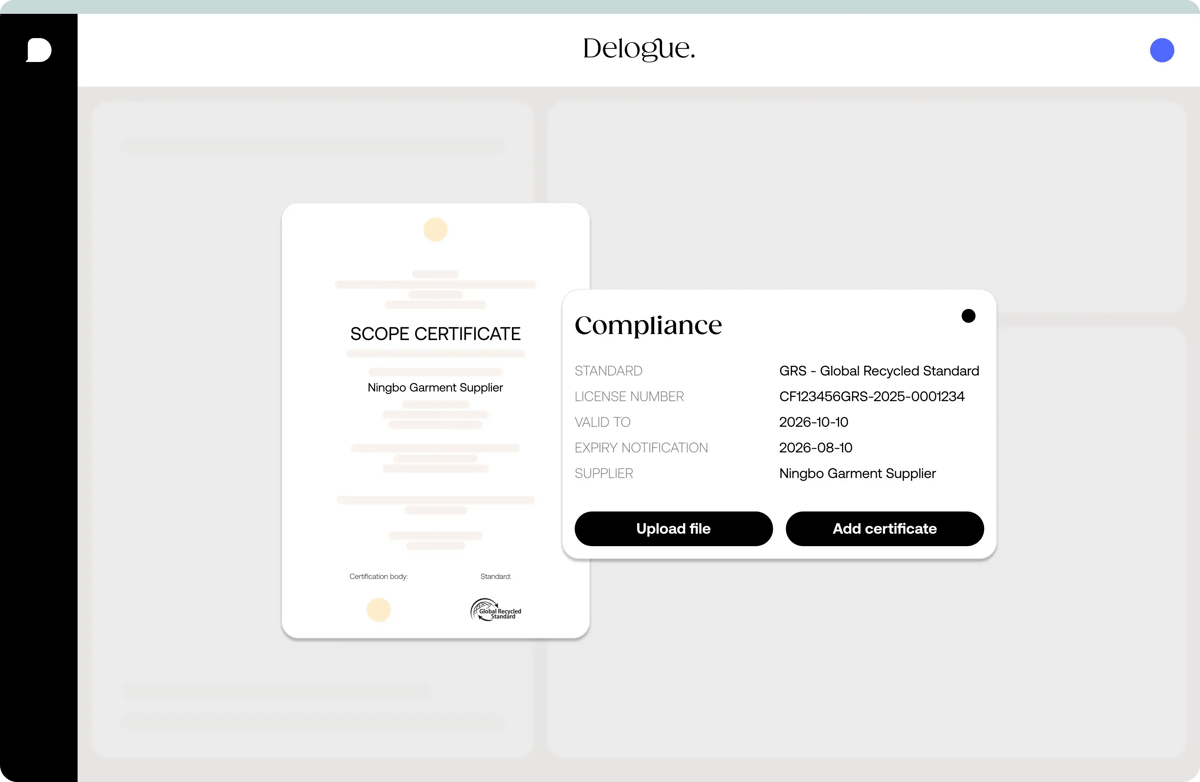
Compliance depends on proof. Traceability, impact calculations, certifications, and claims all need to be backed by solid data. When this work isn’t anchored in actual product development, teams end up spending more time collecting and validating information than creating change.
One product, many perspectives
Precision never belongs to one team alone. It’s created in the space between roles, when design, product development, sustainability, sourcing, production, and suppliers are all working from the same understanding. Fashion is a team sport, and things only really click when everyone is aligned.
When a product developer has a clear overview of available trims and materials, designers gain something surprisingly powerful: creative freedom within clear frames. Ideas become more focused, development moves faster, and fewer styles fall away late in the process. Less rework. Less frustration. More momentum.
That alignment is what turns good intentions into confident execution. One product, seen from many perspectives, but built on shared clarity. That’s where precision truly lives, and where operational excellence starts to feel achievable, season after season.
Check out our monthly webinar
Every month, we host a webinar, often in collaboration with our IT solution partners and leading industry brands. The topics vary, but one thing remains the same: we aim to make the fashion industry’s challenges more manageable and share our take on practical, hands-on solutions.
Check out this month’s webinar by clicking the button below.
8 minute read