

.webp?width=1200&height=698&name=menu%20item%20-%20fashion%20(1).webp)








.webp?width=1200&height=544&name=menu%20item%20-%20collaboration%20(2).webp)
.webp?width=1200&height=544&name=menu%20item%20-%20samples%20(1).webp)
.webp?width=1200&height=544&name=menu%20item%20-%20profit%20%26%20margins%20(1).webp)
.webp?width=1200&height=544&name=menu%20item%20-%20compliance%20(1).webp)





PLM & Product Development

Workwear and technical apparel play by different rules. When garments are built to protect, perform, and comply, there is no room for assumptions or last-minute fixes. Precision is not a luxury in this space. It is the foundation. In this article, we explore why technical brands need a different discipline in product development, how performance must be proven in real conditions, and why compliance should be built into the process from the very first specification.
A different discipline of product development
Of course discipline matters in all product development. Fashion as a whole could benefit from more structure, clearer decisions, and stronger processes. But when we talk about workwear and technical apparel, the level of discipline required shifts. It simply operates on another level.
In this space, performance is not an added value. It is the starting point. A garment must protect, endure, comply, and function before it can impress visually. Safety requirements, durability standards, compliance documentation, and real-world testing shape the product long before colour palettes or silhouettes are finalised.
That changes the mindset of the product team. Precision becomes second nature. Documentation is not paperwork, it is proof. Collaboration with suppliers is not optional, it is essential. Operational excellence here is not about moving fast for the sake of it. It is about working with control, clarity, and confidence from the very first specification.
“
“We cannot run it on thoughts and assumptions and feelings. Data never lie.”
Morten Berthelsen, Sourcing Manager at SIKA Footwear
Designed in the office, tested in reality
Let’s take the performance conversation one step further. Because the truth is, most of us developing workwear are not the ones standing on the construction site in pouring rain or climbing scaffolding for ten hours straight. And that distance matters.
There is always a gap between design assumptions and real-life use. A jacket can look solid and well constructed in a product meeting, yet behave completely differently in freezing temperatures, under constant abrasion, or during long shifts of physical labour. What feels durable on paper must prove itself in motion.
When real working conditions are underestimated, the consequences show up later. Reinforcements that were slightly too light. Fabrics that fail abrasion tests. Seams that give in under strain. These are not minor aesthetic adjustments. They are operational setbacks that cost time, money, and trust.
And here is where it becomes critical. Most delays and corrections happen in the space between brand and supplier. If performance expectations are not described with clarity and precision, they are left open to interpretation. And interpretation creates variation. In technical apparel, precision in communication is just as important as precision in construction.
ISO, PPE, and the paperwork reality
When we talk about compliance in fashion, the conversation usually revolves around regulations, certifications, and product testing. Important, yes. But in workwear, the bar is set higher and the landscape is far more technical. Take EN ISO 20471 as just one example. This is the standard for high-visibility clothing designed to make the wearer clearly seen in high-risk environments, both in daylight and at night. It governs everything from colour areas to the exact placement of reflective tape. And that is only one line in a very long list of standards.
In technical apparel, compliance means navigating ISO standards, PPE classifications, testing protocols, declarations of conformity, technical documentation, and audit requirements. It is detailed, structured, and non-negotiable.
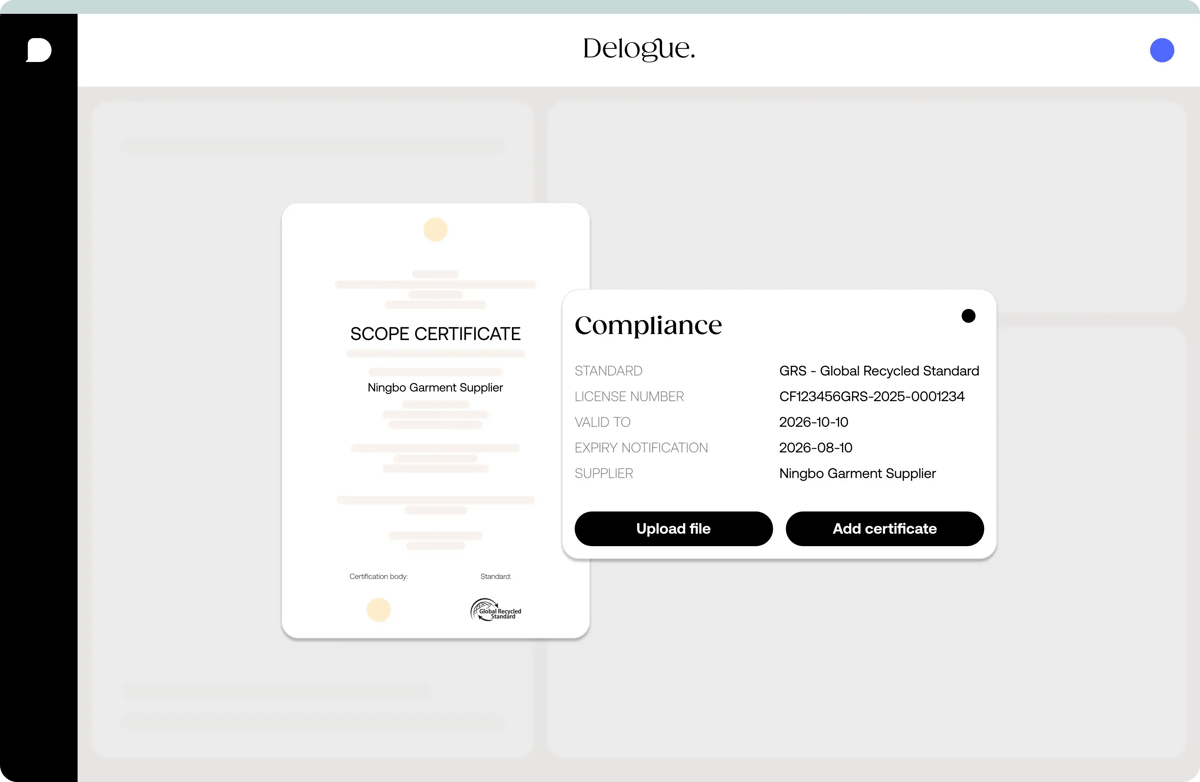
This kind of compliance cannot be added at the end of development as a final checkpoint. It has to be built into the process from the very first specification. Every material choice, every trim, every supplier decision needs to be traceable and supported by the right documentation. Because in this space, performance is not enough. It has to be proven.
“
“In workwear, compliance is simply part of the product. If it’s not proved, it’s not done.”
Anja Padget, Chief Marketing Officer and ESG Expert at Delogue PLM
Turning complexity into control
So how do you actually bring all of this into a structure that works in real life? Because the reality for workwear brands is intense. The pressure often builds in the space between brand and supplier. When documentation lives in email threads, shared folders, and disconnected systems, small gaps quickly become big issues. Certificates expire without anyone noticing. Declarations no longer match the final configuration of a garment. Different versions of the same technical file circulate at the same time. And suddenly, control feels fragile.
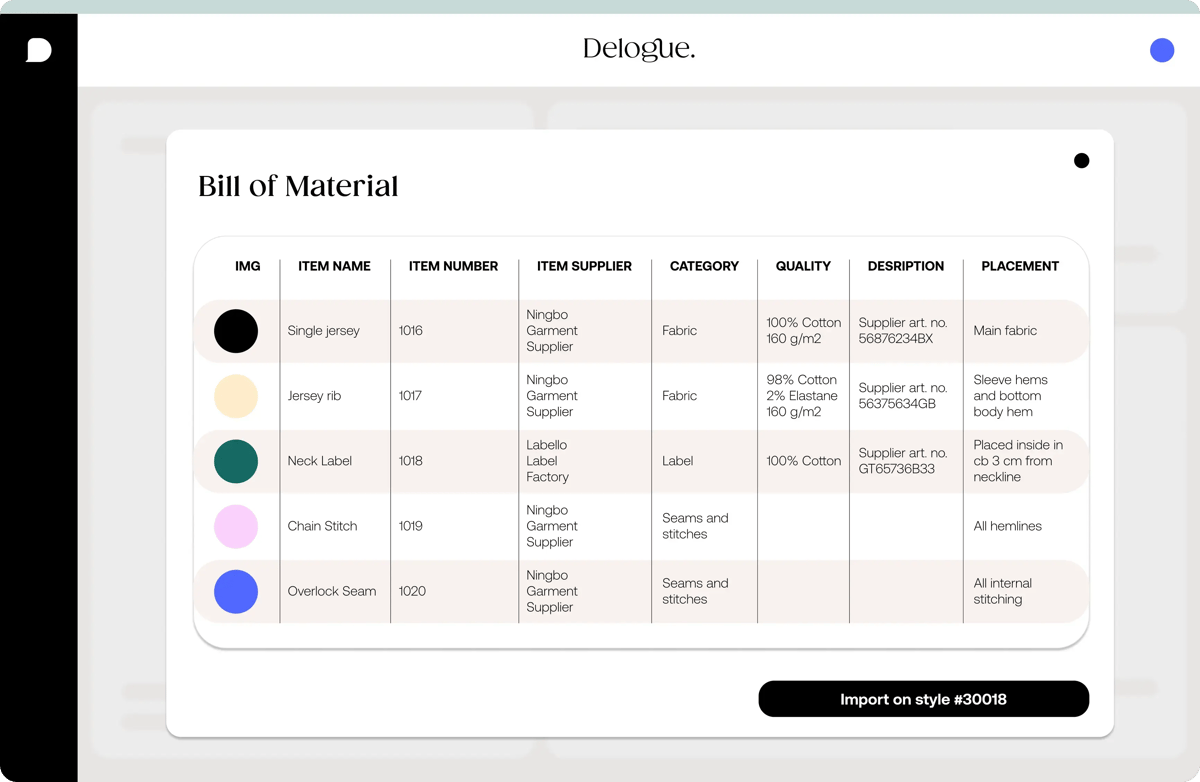
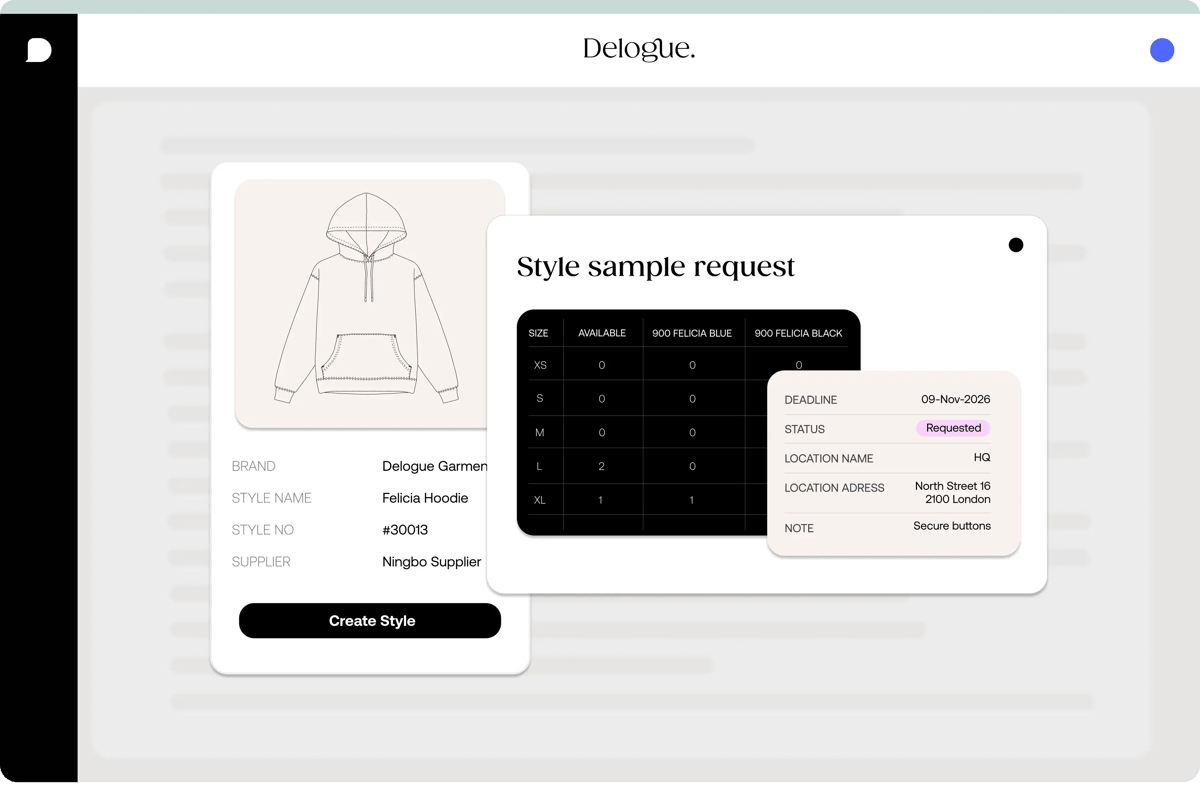
This is where structure makes the difference. In a PLM, technical specifications live in one shared place. Documentation is controlled. Materials and trims sit in structured libraries. Certificates and declarations of conformity are linked directly to the product they belong to. Ownership is clear. Approvals follow a defined flow. And communication between brand and supplier happens in context, not in parallel systems.
When everything connects back to the product itself, complexity starts to feel manageable. Performance you can document becomes performance you can trust. And performance you can trust is performance you can scale with confidence.
Check out our monthly webinar
Every month, we host a webinar, often in collaboration with our IT solution partners and leading industry brands. The topics vary, but one thing remains the same: we aim to make the fashion industry’s challenges more manageable and share our take on practical, hands-on solutions.
Check out this month’s webinar by clicking the button below.
8 minute read